900 MHz private LTE is becoming a foundational technology for utility communications. Utilities are modernizing grid networks to improve visibility, control, and resiliency from the control center to the grid edge. As operational demands grow, utilities need broadband connectivity that delivers predictable performance and long-term control.
The Shift Toward Utility-Controlled Private LTE Networks
Many utilities have relied on narrowband systems, leased services, or public cellular networks. While these options meet basic connectivity needs, they often limit network control and complicate long-term planning. In addition, public and leased networks introduce uncertainty around performance, pricing, and technology roadmaps.
As a result, utilities are turning to private LTE operating on licensed 900 MHz spectrum. This approach gives utilities greater control over coverage, security, and network performance. It also supports predictable quality of service and allows utilities to prioritize critical traffic across the grid.
Why 900 MHz Private LTE Works for Utility Operations
The 900 MHz band offers coverage characteristics well-suited for utility environments. Because of its ability to travel long distances and penetrate obstacles, it supports connectivity across large service territories, including rural and hard-to-reach areas.
For example, utilities use 900 MHz private LTE to connect substations, distribution equipment, and mobile field assets. As utilities expand grid automation and monitoring efforts, 900 MHz private LTE is becoming the broadband wireless standard for mission-critical operations.
Understanding Band 106 and Industry Standardization
In the United States, 900 MHz private LTE has historically been known as Band 8. 3GPP Band 106 is the standardized designation for this same spectrum, aligning utility deployments with global LTE standards.
Because of this, utilities can support both Band 8 and Band 106 devices on the same network using the Multi-Frequency Band Indicator (MFBI). This flexibility allows utilities to transition to standardized Band 106 devices over time while maintaining compatibility with existing deployments.
Extending Private LTE from the Core to the Grid Edge
The value of 900 MHz private LTE increases when connectivity extends beyond the core network to grid-edge assets. Reliable grid-edge connectivity improves visibility, enables faster response to outages, and supports data-driven operations.
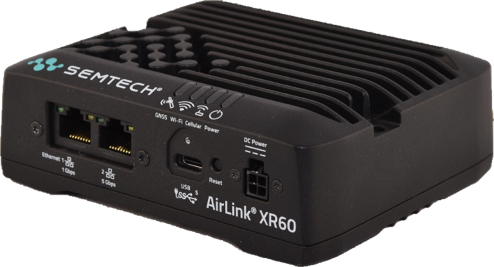
Rugged networking hardware plays an important role in these deployments. For instance, Semtech’s AirLink® XR60 router supports licensed 900 MHz private LTE (Band 106) and is designed for demanding utility environments. This type of equipment helps utilities maintain reliable connectivity in locations where durability and uptime are critical.
Building Resilient, Future-Ready Utility Networks
As utilities plan for increased automation and evolving energy demands, communications infrastructure must support both current and future requirements. In this context, standards-based 900 MHz private LTE provides a scalable and secure foundation for utility communications.
Technology providers such as Semtech continue to support private LTE deployments with utility-grade networking solutions. These solutions help utilities modernize grid communications while maintaining control, security, and long-term flexibility.
Learn More
Learn how Semtech’s AirLink® XR60 supports licensed 900 MHz private LTE for mission-critical utility communications.